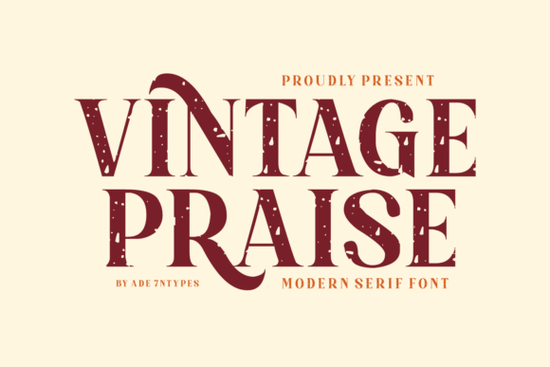
If you're looking for a serif font that feels both classic and fresh something with personality but still easy to use in real projects the Vintage Praise Font is worth your time. It’s not overly ornate, but it carries thoughtful details: subtle ligatures, balanced letterforms, and a gentle contrast between thick and thin strokes. Designers and small business owners often choose it when they want typography that hints at heritage without feeling dated like for a boutique coffee shop logo, a wedding invitation suite, or a limited-edition print-on-demand poster.
Who actually uses Vintage Praise Font?
It shows up most often in work where tone matters as much as legibility. Print-on-demand sellers use it for greeting cards and wall art aimed at audiences who appreciate quiet sophistication not loud trends. Crafters building digital scrapbooking kits lean on its warmth and consistency across weights. Small businesses launching a new brand (especially in wellness, artisan food, or home goods) find it pairs well with soft photography and natural textures. And designers working on editorial layouts think indie magazines or seasonal lookbooks use it for pull quotes and section headers where readability meets character.
What makes it different from other vintage-style serifs?
Unlike fonts that lean heavily into 1920s deco flourishes or 1950s typewriter grit, Vintage Praise Font keeps things grounded. Its curves are smooth but not fussy. Its spacing is open enough for body text at small sizes, yet distinctive enough to stand out in headlines. You’ll notice how the lowercase “g” and “a” have just a touch of old-world charm without requiring special OpenType features to access. That means it works reliably in Canva, Cricut Design Space, Silhouette Studio, and even basic word processors.
It also includes alternate characters and ligatures, but they’re designed to feel intuitive not like hidden Easter eggs. Turn them on in Adobe apps if you want extra polish, or leave them off and still get strong results. That balance is why it fits so naturally alongside other well-made serif fonts like Stanza Font or Aveloire Font, both of which share its clean-yet-characterful approach.
Where does it work best and where might it need help?
Works well:
- Logos and wordmarks (especially with 2–4 words)
- Wedding stationery and baby announcements
- Product packaging for handmade or small-batch goods
- Digital stickers and printable planners
- Instagram quote graphics and Pinterest pins
Less ideal for:
- Long-form body text (e.g., blog posts or eBooks) it’s better suited for headings or short paragraphs
- Ultra-minimalist brands that rely on geometric sans-serifs
- Situations needing extreme scalability (like highway signage or large-format banners over 10 feet wide)
For pairing, try it with a neutral sans-serif like Montserrat or Inter for contrast or layer it with another expressive serif like Biges Font for a layered, magazine-style spread. If you love this style and want more options in the same family, the Aesthetic Elegant Bundle includes Vintage Praise plus several complementary fonts, all with consistent spacing and design language.
How to get the most out of it practically
Start simple. Type out your brand name or headline in Vintage Praise Font, then adjust tracking slightly (+10 to +20) to let the letters breathe. Avoid bolding it unless the file includes a true bold weight most versions are medium or regular, and faux-bold can distort the delicate stroke balance. When exporting for web or social media, convert text to outlines first to preserve those ligatures and alternates.
One thing users consistently mention: it prints beautifully. Whether you’re using a home inkjet or sending files to a local print shop, the contrast holds up well on matte paper and uncoated stock no bleeding or blurring, even at 10–12 pt size.
If you're exploring serif fonts with vintage roots but modern usability, Vintage Praise Font sits comfortably between nostalgic and functional. It doesn’t shout. It invites closer reading and that’s often exactly what thoughtful design needs.
Before you download or license:
- Check which formats are included (OTF, TTF, WOFF?) and confirm compatibility with your tools
- Look at the character set does it include accented characters if you need them for multilingual projects?
- Test it with your actual copy not just “The quick brown fox” to see how spacing and rhythm feel with your words
- Compare it side-by-side with Stanza Font or Aveloire Font to spot subtle differences in x-height and contrast
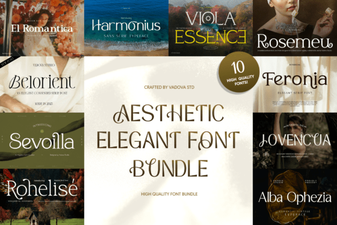 Elegant Font Bundles for Design Projects
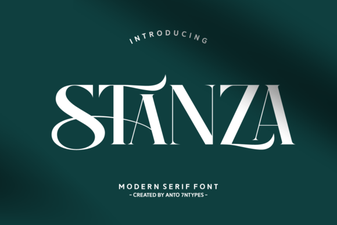 Stanza Font: Versatile Designs for Creative Projects
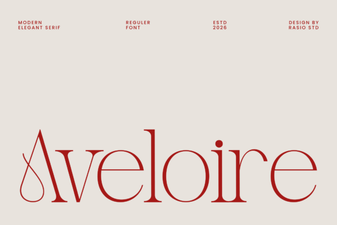 Discovering the Elegance of Aveloire Font
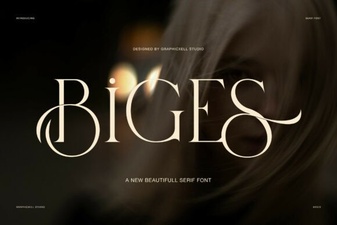 Font Design & Typography Projects for Biges
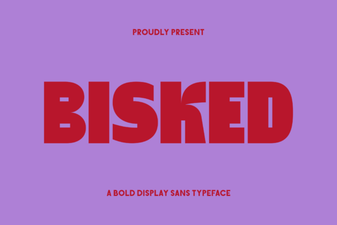 The Bisked Font for Modern Web Design
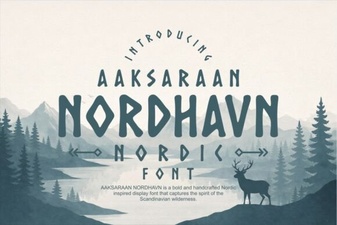 Aaksaraan Nordhavn: the Ideal Design Partner