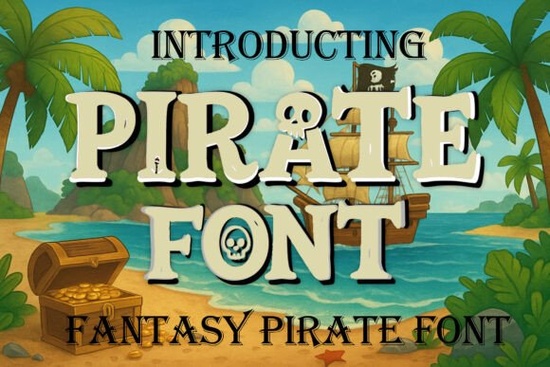
If you're looking for a playful, high-energy font that instantly brings pirate adventures to life especially for kids’ projects the Pirate Font is a thoughtful, well-crafted choice. It’s not just “pirate-themed” in name; the letterforms include subtle cartoonish flourishes swashy ‘R’s, rope-like serifs, and friendly, rounded shapes that keep it approachable for young audiences without sacrificing personality. You’ll find it especially useful when designing things like classroom reading posters, birthday party banners, or illustrated storybook covers where tone and age-appropriateness matter.
Who actually uses Pirate Font and why?
Designers working with schools or children’s publishers often reach for this typeface when they need visual consistency across a series of themed materials say, a unit on explorers or ocean life. Crafters making printable party kits appreciate how easily it scales: it holds up cleanly at small sizes (like 14 pt on an invitation corner) and still reads clearly at large formats (think 24" x 36" classroom posters). Print-on-demand sellers use it to differentiate their niche offerings especially in categories like kids’ activity books, educational wall art, or themed party decor where buyers scan quickly and respond to strong, recognizable style cues.
Small businesses building local branding like a seaside toy shop or a children’s museum gift store also find value here. Unlike overly ornate script fonts that can feel dated or hard to read, Pirate Font balances charm with legibility. Its lowercase letters have generous x-heights and open counters, so even younger readers can recognize words like “treasure” or “adventure” without squinting.
How does it compare to other decorative fonts?
It’s helpful to think of decorative fonts as tools with specific jobs not all-purpose replacements for body text. Aftab Font, for example, leans more toward elegant, hand-lettered sophistication great for wedding stationery or boutique packaging. Elm Font has a gentle, organic feel suited to nature-themed nursery prints or eco-friendly product labels. Pirate Font sits firmly in the “playful illustration” category: bold enough for headlines, friendly enough for early readers, and flexible enough to pair with simple sans-serifs like Montserrat or Nunito for balanced layouts.
One practical note: because it’s designed with children in mind, it avoids sharp angles or aggressive contrast that might feel intimidating. That makes it a better fit than, say, a gothic blackletter or distressed grunge font even if those also evoke “pirate” vibes when your audience includes ages 4–10.
Where does it work best in real projects?
- Book titles and chapter headings especially for early chapter books or leveled readers with nautical themes.
- Pirate party invitations and thank-you cards pair it with clipart of parrots, maps, or treasure chests for cohesive DIY kits.
- Classroom displays use it for anchor charts about nouns, verbs, or map skills to spark engagement without overwhelming students.
- Small business signage like a chalkboard menu for a kids’ café or window decals for a summer camp office.
It’s worth noting that while Pirate Font shines in display roles, it’s not intended for long paragraphs. For readability, reserve it for short bursts of text headlines, labels, logos, or decorative accents and switch to a clear, neutral font for supporting copy.
A few things to keep in mind before downloading
Like most Creative Fabrica fonts, Pirate Font comes with standard OpenType features (uppercase, lowercase, numbers, basic punctuation), but no stylistic alternates or ligatures. That keeps file size light and installation simple no need to manage multiple font files. It supports Latin-based languages (English, Spanish, French, German, etc.), but doesn’t include extended diacritics for Eastern European or Cyrillic scripts.
If you’re sourcing fonts for commercial resale like editable Canva templates or SVG cut files double-check the license terms. This one allows commercial use, including POD and digital downloads, as long as you’re not redistributing the font file itself.
For crafters who frequently mix fonts in layered designs, consider pairing Pirate Font with a clean, geometric sans-serif for contrast or even a soft handwritten style like Elm Font for secondary text, to keep the overall mood warm and inviting.
Before you start designing: Test the font at your intended output size first especially if printing on textured paper or using heat-transfer vinyl. Some playful details (like thin rope strokes) may soften or fill in depending on resolution and material. A quick 2-inch print test saves time later.
Learn More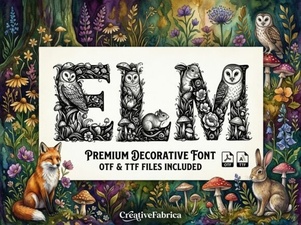 Elm Font: Creative Design Ideas & Web Projects
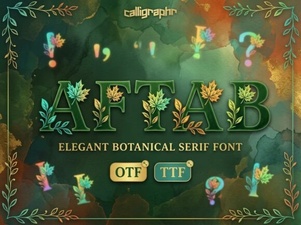 Aftab Font: Versatile Typography for Modern Design
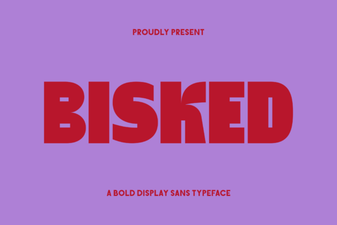 The Bisked Font for Modern Web Design
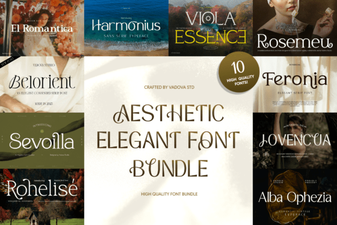 Elegant Font Bundles for Design Projects
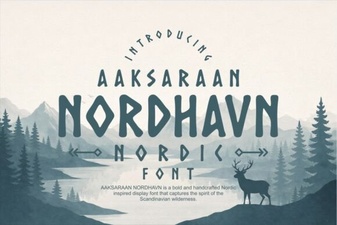 Aaksaraan Nordhavn: the Ideal Design Partner
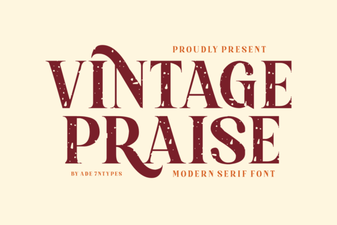 Vintage Praise Font: Design Ideas & Free Downloads